Last Updated: July 27, 2026
Contents Overview
Why Mindfulness Matters for Children With Anxiety
As adults, we often hear about the benefits of mindfulness and how it can reduce stress and improve focus. But did you know that mindfulness activities for children can be just as helpful?
Children today are growing up in a busy world filled with school, screens, social situations and big emotions that can sometimes feel overwhelming. That’s why introducing mindfulness at an early age is so valuable. It gives them a chance to slow down, take a deep breath and understand how they’re feeling before those emotions become too difficult to manage.
In this guide, you’ll discover 11 simple and tested mindfulness activities for children that can help improve emotional regulation, reduce anxiety and increase focus. You’ll also find easy breathing exercises for kids that you can start using today.
As children practice mindfulness, they become more aware of their thoughts and feelings. Over time, they learn to manage their emotions better, stay calm during difficult moments and feel more confident in handling everyday challenges. They also become less likely to overthink or put things off, while growing into kinder, more caring and more grateful individuals.
What Is Mindfulness For Kids?
Mindfulness is simply paying attention to the present moment and being fully involved in whatever you’re doing, wherever you are. It means noticing your thoughts, feelings and surroundings without judging them. This is the simple idea behind many mindfulness activities for children.
For children, this could mean focusing on their breathing, describing what they see outside, noticing the thoughts in their mind or checking in with how their body feels.
The best part is that mindfulness doesn’t have to be quiet or serious. It can be fun, playful, creative and even a little silly. What matters most is helping your child become more aware of both their inner thoughts and the world around them in a gentle and supportive way.
If you’re wondering what mindfulness is and how it supports overall well-being, the American Psychological Association has a simple explanation of mindfulness and its benefits here:
https://www.apa.org/topics/mindfulness
11 Mindfulness Activities for Children With Anxiety
These mindfulness activities for children are easy to do at home, in the classroom or even outdoors. You don’t need any special equipment or expensive materials. All you need is a few minutes, a little patience and a child who’s willing to give them a try. The goal isn’t to do them perfectly. It’s simply to help children slow down, notice what’s happening around and within them, and feel more calm and confident over time.
️1. Bubble Breathing: Easy Breathing Exercise for Kids To Feel Calm
This is one of the simplest breathing exercises for children. Ask your child to take a slow, deep breath in through their nose. Then have them breathe out gently as if they’re blowing a giant bubble. They can imagine the bubble getting bigger and floating away into the sky.
This playful activity helps slow down their breathing, relax their body and shift their attention away from stressful thoughts. Practicing about 8 to 10 slow breaths can help them feel calmer, happier and more in control of their emotions.
2. Color Walk: Fun Color Activity To Improve Focus
Go for a short walk with your child. It could be in your garden, at a park or around your neighborhood. Ask them to look for different colors as they walk. They can search for all the colors of the rainbow or pick one color and try to find as many objects of that color as possible.
This simple activity encourages children to pay attention to what’s around them instead of getting lost in their thoughts. It also improves focus while making an ordinary walk feel like a fun game.
3. Feelings Art: Drawing Feelings To Understand Anxiety
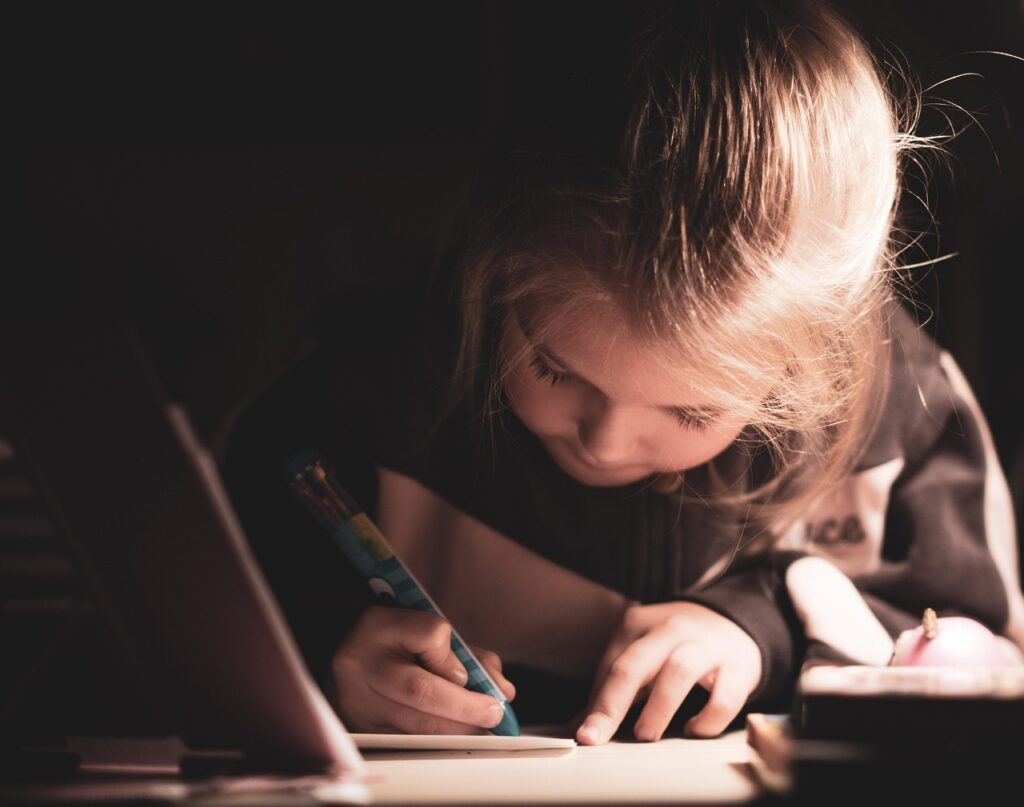
Give your child a sheet of paper along with some crayons, markers or colored pencils. Invite them to draw how they’re feeling using colors, shapes or pictures. There is no right or wrong way to do it.
If they feel comfortable, ask them to tell you about their drawing. Sometimes children struggle to explain their emotions with words, and drawing gives them a safe way to express what’s going on inside.
4. Worry Box: Simple Activity To Let Go Of Worries
Take any box you have at home and label it the “Worry Box.” Ask your child to write or draw something that’s worrying or upsetting them. Then let them place it inside the box.
You can keep the box near the trash or in another meaningful place to show that the worry has been set aside. This small ritual reminds children that they don’t have to carry every worry with them all day and that it’s okay to let difficult thoughts go.
5. 5-4-3-2-1 Senses Game for Child Anxiety
Sit with your child and ask them to notice their surroundings by naming:
- 5 things they can see
- 4 things they can touch
- 3 things they can hear
- 2 things they can smell
- 1 thing they can taste
This grounding exercise gently brings their attention back to the present moment instead of anxious thoughts. I personally use it whenever I feel overwhelmed, and it always helps me feel more calm and connected to the present.
These mindfulness activities for children are meant to be simple and enjoyable, not perfect. As children practice them regularly, they slowly become more aware of their thoughts, feelings and surroundings. Over time, these small habits can help them stay calmer and respond to challenges with greater confidence.
6. Belly Breathing With A Stuffed Toy: Calming Breathing For Anxious Kids
Ask your child to lie on their back and place a small stuffed toy on their belly. Then encourage them to take slow, deep breaths so the toy rises as they breathe in and falls as they breathe out.
Watching the toy move makes deep breathing easier to understand and much more fun. It also helps children naturally slow their breathing and relax their bodies.
7. Gratitude Jar: Simple Mindfulness Activity For Positive Thinking
At the end of each day, ask your child to write or draw one thing they’re thankful for. Fold the note and place it inside a gratitude jar.
As the jar fills up, it becomes a collection of happy memories and small moments of joy. On difficult days, reading a few of those notes can remind children that there is always something good in their lives, even when things feel hard.
8. Mindful Listening Game To Stay In The Present
Invite your child to sit quietly for one minute and listen carefully to the sounds around them. Ask them, “What sounds can you hear?”
They might notice birds singing, a fan running, cars outside, a ticking clock or even their own breathing. This activity teaches children to slow down, pay attention and strengthen their focus without needing to do anything complicated.
9. Mindful Journaling: Calming Activity for Kids Who Overthink
Encourage your child to keep a simple journal where they can draw pictures or write about their day and their feelings. You can also give them gentle prompts like, “What made you smile today?” or “What are you proud of today?”
Journaling gives children a healthy way to express their emotions, understand themselves better, and let go of the worrying thoughts moving in their minds.
10. Thought Clouds: Visual Activity To Let Worried Thoughts Pass
Ask your child to imagine that every thought is a cloud floating across the sky. If there are lots of thoughts, they can picture a cloudy sky. If there are only a few, they can imagine a bright, clear day.
Teach them to simply watch the clouds drift by instead of trying to hold onto them. This helps children understand that thoughts come and go on their own, and they don’t have to believe or react to every thought running in their head.
11. One Kind Act: Easy Mindfulness Activity To Feel Good
Ask your child, “What’s one kind thing you can do today for yourself or for someone else?” Listen to whatever they say and encourage their idea, even if it’s something small.
Small acts of kindness help children build empathy, strengthen their relationships and understand that even simple actions can brighten someone’s day. It also reminds them that being kind to themselves is just as important as being kind to everyone else.
Remember, while all the above 11 mindfulness activities for children can benefit your child in different ways, you don’t have to try them all at once. Start with one or two activities that your child enjoys the most, and make them a regular part of your routine. Over time, these small moments of mindfulness can help your child become calmer, more emotionally aware and better able to handle everyday challenges.
FAQs About Mindfulness Activities For Children With Anxiety
🌟 1. How do you explain mindfulness to a child?
A simple way to explain mindfulness is to tell your child that it means paying attention to what’s happening right now. It could be noticing their breathing, the colors around them or how their body feels. You can even say they’re becoming a little detective who notices their thoughts, feelings and surroundings. This makes mindfulness activities for children easier to understand and more fun to practice.
🌟 2. What are good mindfulness activities for 5 year olds?
Some of the best mindfulness activities for children who are around 5 years old are Bubble Breathing, Belly Breathing with a stuffed toy and the Color Walk. These activities are simple, fun and easy for young children to follow. Since young children can’t focus for very long, keeping each activity to about 2–3 minutes works best.
🌟 3. Can mindfulness help with child anxiety?
Yes, it can. Activities like the 5-4-3-2-1 Senses Game and Belly Breathing are often used by child therapists to help children feel calmer during anxious moments. They gently shift a child’s attention away from worried thoughts and bring their focus back to the present. When children practice mindfulness activities regularly, they slowly learn how to handle stress and manage their emotions with more confidence.
5 Simple Tips For Parents To Practice Mindfulness At Home
⭐ Keep each activity short, fun and relaxed. For young children, even 2 to 5 minutes is enough to enjoy the benefits without losing interest.
⭐ Let your child express themselves in whatever way feels most natural to them. They can use words, drawings, colors or movement. There is no right or wrong way to take part in mindfulness activities for children.
⭐ Join your child whenever you can. Your presence helps them feel safe, supported and more excited to participate. It also gives you a chance to connect with them and enjoy the moment together.
⭐ Stay consistent, but don’t make it feel like a chore. Mix things up by trying different activities so mindfulness stays fresh, interesting and something your child looks forward to.
⭐ Celebrate your child’s effort instead of expecting perfection. Mindfulness is a skill that grows over time, so focus on helping them build a healthy habit rather than treating it like another task to complete.
If you’d like to learn more about how mindfulness supports children’s emotional well-being, the Child Mind Institute’s guide to mindfulness for kids explains the benefits in a simple, practical way for parents and caregivers. It also includes age-appropriate activities you can try at home.
Mindfulness isn’t about staying calm all the time. It’s about learning how to find your way back to calm when life feels busy or overwhelming. When we teach children to pause, take a deep breath and notice how they’re feeling, we’re giving them a skill that will support them for years to come. Through mindfulness activities for children, they learn to respond instead of react, and to live with more awareness instead of always rushing through life.
Start with just one of these mindfulness activities for children and make it a gentle, enjoyable part of your daily routine. There’s no need to do everything at once. With regular practice, you may notice your child becoming more emotionally aware, more focused and more confident in handling their feelings.
Because sometimes, the biggest growth begins with just a few quiet moments.