

Last Updated: July 19, 2026
Content Overview
Mindfulness is the practice of being fully present in the current moment instead of getting caught up in worries about the past or the future. One of the best things about it is that it helps you experience life without constantly judging yourself, other people, or situations. If you’re looking for mindfulness activities for busy people, the good news is that you don’t need hours of free time to experience its benefits.
Even a few mindful moments each day can make a real difference. Over time, mindfulness becomes more than just a habit. It becomes a way of living that helps you feel more peaceful, stay connected to yourself, and attract the experiences and goals you truly want in life.
Practicing mindfulness can help reduce stress, improve your focus, and make everyday challenges feel more manageable. When your mind is calm, it becomes easier to think clearly and take meaningful action. Mindfulness doesn’t always require meditation or a special routine. It can be as simple as paying attention to your breathing for a minute or noticing the warmth and weight of a cup of coffee in your hands.
These small moments may seem ordinary, but they can have a powerful impact on the way you think, feel, and respond to life. The key is to take a few minutes to be fully present in whatever you are doing. This simple practice can help you feel calmer, happier, and more in control of your day.
5 Easy mindfulness activities for busy people (just 5 minutes each)
Below are five quick mindfulness activities for people who are unsure where to begin their mindfulness journey. Don’t assume that because these activities are quick, they won’t be effective. In reality, small and consistent actions often create the biggest changes over time. By practicing these simple exercises regularly, you’ll gradually notice positive changes in your thoughts, emotions, and overall quality of life.
Mindful Activity #1: Deep Breathing
Our breath is our life. The way we breathe often reflects the state of our mind and the way we are experiencing life. Many people are surprised to hear this and may wonder, “Is there really a right way to breathe?”
The answer is yes. Most of us breathe without thinking about it, but over time, we develop breathing patterns that can affect not only our state of mind but also our overall quality of life. Your breathing gives valuable clues about your physical, mental, and emotional well-being. That is why mindful breathing is one of the simplest and most effective mindfulness activities for busy people. It doesn’t require any special equipment or extra time. All it takes is a few moments of your attention.
Take a minute to observe your breathing. Don’t try to change it. Simply notice how you are breathing. Ask yourself these questions:
Is your breathing shallow or deep?
How many breaths are you taking in one minute?
Your breathing rate can tell you a lot about your current state:
12–14 breaths per minute: Your mind is calm, relaxed, and balanced. This is considered an ideal state for meditation because your body and mind are at ease.
14–20 breaths per minute: This is generally considered a healthy breathing range.
20–30 breaths per minute: This suggests an increased breathing rate, which may mean you are feeling anxious, nervous, stressed, or overwhelmed.
More than 30 breaths per minute: This is rapid breathing and can indicate a severe state of anxiety or panic. It is a sign that your body is under significant stress and needs immediate attention.
The important thing to understand is that panic never helps, no matter how difficult your situation may seem. Every challenge becomes easier to handle when your mind is calm, clear, and balanced. When you panic, it becomes harder to think clearly and make good decisions.
The first step toward bringing your mind back into balance is to ground yourself. One of the easiest ways to do that is by becoming aware of your breath and mindfully taking control of it.
If you notice that your breathing is faster than usual, pause for a moment. Sit comfortably with your eyes open or closed—whichever feels more comfortable for you. Then gently bring your attention to the present moment by focusing on your breathing. Notice every inhale as it enters your body, and every exhale as it leaves. There is no need to force or control your breath. Simply observe it with your full attention.
As you continue to focus on your breathing for just one or two minutes, you will often notice that your breath naturally begins to slow down. According to research, this is extremely beneficial because as your breathing becomes calmer, your mind also starts to settle, and you begin to feel more relaxed and in control.
This is one of the reasons why breathing exercises remain one of the most practical mindfulness activities for busy people. They fit easily into any schedule and can help you regain a sense of calm wherever you are.
Now think about what happens when you do the opposite. If you keep focusing on fearful or negative thoughts, your body responds by creating even more panic. Your breathing becomes faster, your mind races even more, and this creates a cycle of anxiety that keeps feeding itself. By choosing to return your attention to your breath instead, you break that cycle and give yourself the chance to respond to life with greater calm and clarity.
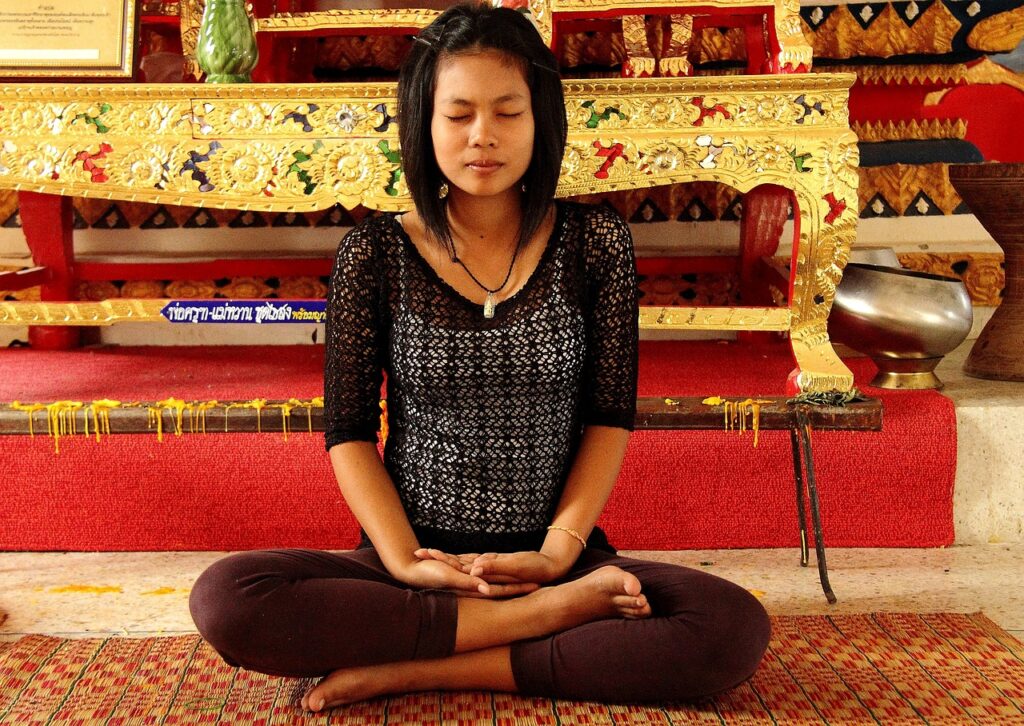
When you focus on your breath, you naturally reconnect with your body, and your mind begins to calm down. Your attention shifts away from racing thoughts and returns to the present moment. This simple habit may seem small, but it can have a powerful effect on how you feel throughout the day.
Try checking in with your breath consciously at least three to five times a day. Every time you do this, you are training your mind to choose slow, deep breathing instead of the shallow breathing that often happens when you’re stressed or distracted. The more you practice, the more natural this way of breathing becomes.
With regular practice, deep breathing gradually becomes a part of your daily lifestyle rather than something you have to remember to do. Over time, you may notice that your breathing pattern changes naturally. As your breathing becomes calmer and deeper, your mood can also improve, helping you feel more relaxed, balanced, and emotionally steady.
One of the best things about this exercise is that it takes less than a minute. It is one of the easiest mindfulness activities for busy people because you can practice it almost anywhere and at any time. You can do it while sitting at your work desk, watching television, waiting in line, travelling, or even while doing household chores.
Whenever life starts to feel overwhelming, simply returning your attention to your breath can help you pause, regain your balance, and respond to the situation with a calmer and clearer mind. Since daily life is filled with responsibilities, unexpected challenges, and stressful moments, this simple practice can become a reliable tool that you can turn to whenever you need it most.
Mindful Activity #2: The 5-4-3-2-1 Grounding Technique
The 5-4-3-2-1 technique is a simple and highly effective mindfulness exercise. It is one of the easiest mindfulness activities for busy people because it can be done almost anywhere and only takes a few minutes. Whenever you feel anxious, overwhelmed, or distracted, this technique helps bring your attention back to the present moment by engaging all five of your senses.
Here’s how it works. You slowly focus on each of your senses in this order:
- 5 things you can see around you (visual)
- 4 things you can touch or physically feel (kinesthetic)
- 3 sounds you can hear (auditory)
- 2 things you can smell (olfactory)
- 1 thing you can taste (gustatory)
Let’s understand this with an example.
Imagine you’re feeling anxious and decide to use this technique to calm yourself. First, look around and identify five things you can see. These could be a pen, your mobile phone, a notebook, a water bottle, and a decorative item on your desk.
Next, notice four things you can touch. You might feel the fabric of your clothes, your skin, your hair, and the surface of the table in front of you.
Then, pay attention to three sounds you can hear. These could be birds chirping in the distance, the sound of a fan, and even the sound of your own breathing.
After that, identify two things you can smell. It could be the fragrance of the perfume you’re wearing and the natural scent in the air around you.
Finally, focus on one thing you can taste. If you have something nearby, such as a candy or a piece of chocolate, notice its taste carefully. Even if you don’t have food with you, simply becoming aware of the taste already present in your mouth is enough.
This simple yet powerful technique gently shifts your attention away from anxious thoughts and brings it back to what is happening right now. Instead of getting lost in worries about the past or the future, your mind becomes fully engaged with your surroundings through your senses. As a result, you begin to feel more grounded, calm, and connected to the present moment. This is exactly why the 5-4-3-2-1 technique is one of the most effective mindfulness practices you can use whenever you need a quick mental reset.

Mindful Activity #3: Body Scan
The body scan, also known as Yoga Nidra, is a powerful mindfulness practice that helps your body relax and heal. It is one of the most calming mindfulness activities for busy people because it doesn’t require any special equipment or a long time to practice. Even a short body scan can help release stress that builds up throughout the day.
I first learned this exercise from my yoga teacher, who explained the many health benefits of practicing Yoga Nidra regularly. Since then, it has become one of my favorite mindfulness techniques because of the positive changes I have personally experienced.
I’ve also shared in my earlier posts how this practice has helped increase my energy levels and improve the quality of my sleep. For me, it has been one of the most effective ways to relax both my body and mind after a long day.
The practice itself is very simple. Begin by mentally scanning your body, starting from your toes and slowly moving all the way up to your head. As you bring your attention to each body part, take a moment to notice whether it feels tight, tense, or relaxed. The goal is not to judge what you feel but simply to become aware of it.
If you notice tension in any area, gently focus your attention there. You can take a few slow breaths and imagine the tension gradually melting away with every exhale. Another option is to gently tighten that particular body part for a few seconds and then relax it completely. As you release the muscles, imagine yourself letting go of all the stress and tension they have been holding.
If you’re busy or at work, you can still practice this exercise while sitting comfortably in your chair. A quick body scan takes less than a minute and can help you reset before returning to your tasks.
However, in my personal experience, the best time to practice Yoga Nidra is while lying down just before going to sleep. This allows your entire body to relax without any distractions.
When I first started practicing this technique, I often fell asleep within just a few minutes of completing it. And the sleep I experienced felt incredibly deep and refreshing. The next morning, I would wake up feeling well-rested, lighter, and full of energy. It genuinely felt as though both my body and mind had recovered overnight, making me feel completely different the next day. This is one of the reasons why body scanning continues to be one of the most favorite mindfulness activities for busy people, especially for those who practice yoga.
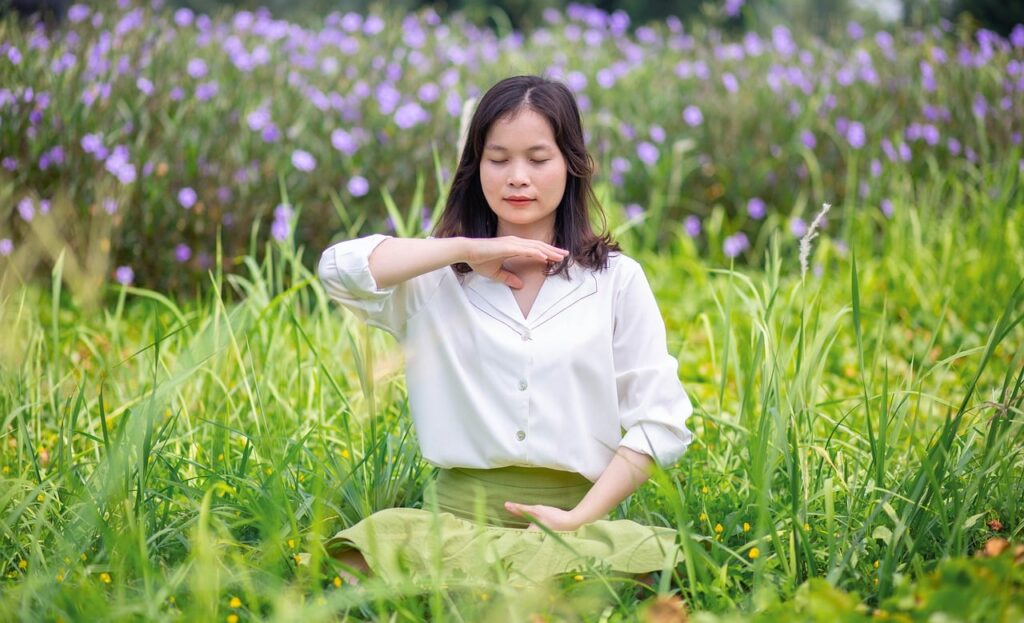
Mindful Activity #4: Expressing Gratitude
Whenever you feel overwhelmed by negative emotions, pause for a moment and take a deep breath. Then gently shift your attention to something you are truly grateful for. This is one of the simplest mindfulness activities for busy people because it only takes a minute or two, yet it can completely change the direction of your thoughts and help you feel more grounded.
Your gratitude can be for something small that happened during the day, such as waking up on time, catching your bus without rushing, or greeting a colleague with a smile. It can also be for the bigger blessings in your life, like having a loving and supportive family or partner, a safe and comfortable home, a pet that brings you joy, good health, or the opportunity to work and earn a living. Once you begin looking for things to appreciate, you’ll realize that there are countless blessings around you every single day.
The purpose of this practice is to shift your focus from negative thoughts to positive ones. Instead of letting your mind stay stuck on what went wrong, you consciously choose to notice what is still good in your life.
You can take this practice one step further by trying to find something positive even within a difficult situation. At first, this may seem impossible. You might wonder, “How can anything positive come from something that upsets me?” With practice, however, you’ll begin to see that many challenges also bring opportunities to learn and grow.
For example, imagine your boss criticizes you for submitting a poor report. Instead of only feeling hurt or discouraged, you can choose to see it as an opportunity to improve your skills, learn from your mistakes, and perform better the next time. Looking at the situation this way doesn’t mean ignoring your feelings. It simply means choosing a perspective that helps you move forward instead of keeping you stuck.
The same idea applies to disagreements with your partner. Rather than seeing an argument as something that damages your relationship, view it as an opportunity to understand each other better. Honest and respectful conversations can strengthen your bond, improve communication, and help both of you grow together.
Here’s another everyday example. Imagine your Wi-Fi or internet connection suddenly stops working, and you begin to feel frustrated. Instead of getting angry over something you can’t immediately control, use those few unexpected minutes to do something meaningful. You could meditate, repeat a few positive affirmations, take a few slow breaths, smile, or simply observe the blessings around you. Turning an irritating moment into a mindful one can completely change how you feel.
This practice helps you shift your mindset from stress to appreciation in just a minute or two. Like many other mindfulness activities for busy people, this too doesn’t require extra time or special preparation. You can practice it wherever you are, whenever negative emotions arise. Over time, choosing gratitude and finding the positive in everyday situations becomes a habit. The science of gratitude shows that as this habit grows, it helps you develop a calmer mindset, greater emotional resilience, and a stronger, more positive personality.

Mindful Activity #5: Visualization
Whenever you get a short break from work or your daily routine, close your eyes for a minute and imagine yourself in a peaceful place. This is one of the most relaxing mindfulness activities for busy people because it transports you to a happier world. All you need is a quiet moment and your imagination.
Picture yourself in a place that makes you feel calm and safe. It could be a beautiful garden filled with flowers, a quiet forest, a peaceful lake, a sandy beach, or any location that brings you a sense of comfort. There is no right or wrong place. Choose whatever helps you feel relaxed.
As you imagine the scene, add as many sensory details as possible. Notice the colors around you, the sounds you can hear, the fresh scents in the air, the warmth of the sunlight on your skin, or the cool breeze gently touching your face. The more vividly you imagine the experience, the easier it becomes for your mind and body to relax.
When you practice visualization in this way, your mind begins to respond as though the experience is actually happening in the moment. That’s because your brain doesn’t always distinguish between a vividly imagined experience and a real one. That’s why adding rich details can make the visualization feel more real, helping you feel calmer, happier, and more refreshed within just a few minutes.
Like any mindfulness practice, visualization works best when you do it regularly instead of treating it as a one-time exercise. You can revisit the same peaceful place every day if it makes you feel comfortable, or you can imagine a different setting each time. Feel free to change the details, explore new places, and create experiences that bring you joy. The important thing is to make it a daily habit.
To make this exercise even more meaningful, imagine spending time with the people you love or doing things you’ve always wanted to experience. See yourself smiling, feeling peaceful, and enjoying those moments as if they are happening right now. Many people believe that regularly visualizing positive experiences also helps strengthen a positive mindset and supports the process of manifestation by aligning your thoughts, emotions, and actions with what you want to create in your life.
Because of the beautiful feeling it immediately evokes within us, this activity is considered one of the most popular mindfulness activities for busy people to include in their packed schedule. Whether you’re taking a break at work, commuting, or winding down before bed, a short visualization session can help you feel calmer, reduce stress, and reconnect with the present moment while creating a more positive outlook on life.

These five mindfulness activities for busy people take only 2 to 3 minutes each, a maximum of 5 minutes, maybe. But their impact can be much greater than the time they require. Practicing them regularly can help reduce stress, improve your mental clarity, boost your focus, and bring a greater sense of calm and peace into your daily life. The key isn’t how long you practice, but how consistently you make mindfulness a part of your routine. Even a few mindful minutes every day can lead to meaningful and lasting positive changes over time.
Now I’d love to hear from you—which of these mindfulness activities for busy people did you like the most? I shared my personal favorite in this article, and I’m curious to know which one you’re excited to try first.


7 thoughts on “5 Easy Mindfulness Activities for Busy People to Try Today”