
Last Updated: July 21, 2026
Contents Overview
What Is Mindful Meditation?
Mindful meditation is the simple practice of focusing your attention on one thing, such as your breath, a mantra, or a visualization, to create a sense of inner peace and calm. While the idea sounds easy, many people find it surprisingly difficult to quiet their minds and stay present.
I first experienced mindful meditation during my yoga classes where my teacher never started or ended a session suddenly. Before every class, we would sit quietly with our eyes closed for at least three minutes. Then we would begin with a prayer and a clear intention. At the end of the session, we would lie in Shavasana — resting flat on our backs with our arms and legs relaxed. While we stayed in that position, my teacher guided us through a 15-minute visualization before gently ending the class.
The experience was so calming that I sometimes fell asleep on my mat for a few minutes. Whenever that happened, I noticed that the rest of my day felt lighter, calmer, and more enjoyable.
In the beginning, I thought meditation was simply an extra activity added to the yoga class. But because it was part of every session, I followed my teacher’s instructions exactly as I was asked to. Within about five days, I started to notice the deeper effect it had on my mind and overall well-being.
Since then, mindful meditation has become a regular part of my routine. I don’t follow strict rules when I practice. Instead, I listen to my intuition and do what feels right in the moment. Some sessions last only a few minutes, while others are much longer, but each one leaves me feeling refreshed.
One of the best things about meditation is that there is no single right way to practice it. You can sit quietly in silence, focus on a sound around you, picture a peaceful scene, repeat a mantra, or simply pay attention to your breathing. The flexibility of the practice makes it easy for anyone to find a method that feels natural to them.
In addition, according to the Mayo Clinic, mindful meditation has scientifically proven benefits for managing stress and anxiety. This is an added benefit that shows how simple daily practices can have a lasting impact on your overall well-being.
What Is Mindfulness?
In simple terms, mindfulness is the practice of being fully present in the current moment. It means paying attention to what is happening right now instead of getting lost in thoughts about the past or the future. Mindful meditation is one of the most effective ways to develop this habit because it trains your mind to return to the present whenever it wanders.
Although living in the moment sounds simple, it is not always easy. Our mind is often called the “monkey mind” because of how it constantly jumps between memories of the past and worries about the future. Learning to calm this restless mind takes regular practice. It means gently reminding yourself to let go of thoughts that pull you away from the present and bringing your attention back to what is happening now.
Like any other habit, mindfulness becomes easier with consistent practice. Your mind will still wander from time to time, but as you strengthen your awareness, you will find it much easier to notice those distractions and return your focus to the present moment.
The Role Of Mindfulness In Meditation
Mindfulness and meditation are deeply connected because both help you become more aware of yourself and the present moment. Mindful meditation brings these two practices together by helping you stay present while observing your thoughts without getting caught up in them. The purpose of this is to stay connected to the present instead of letting your mind drift into the past or the future.
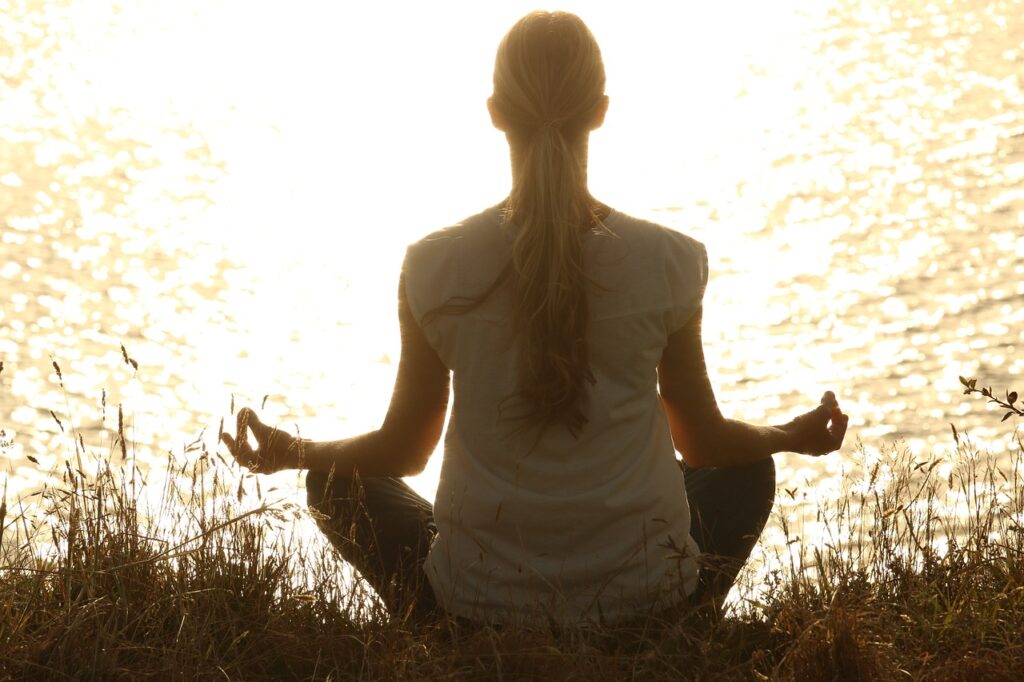
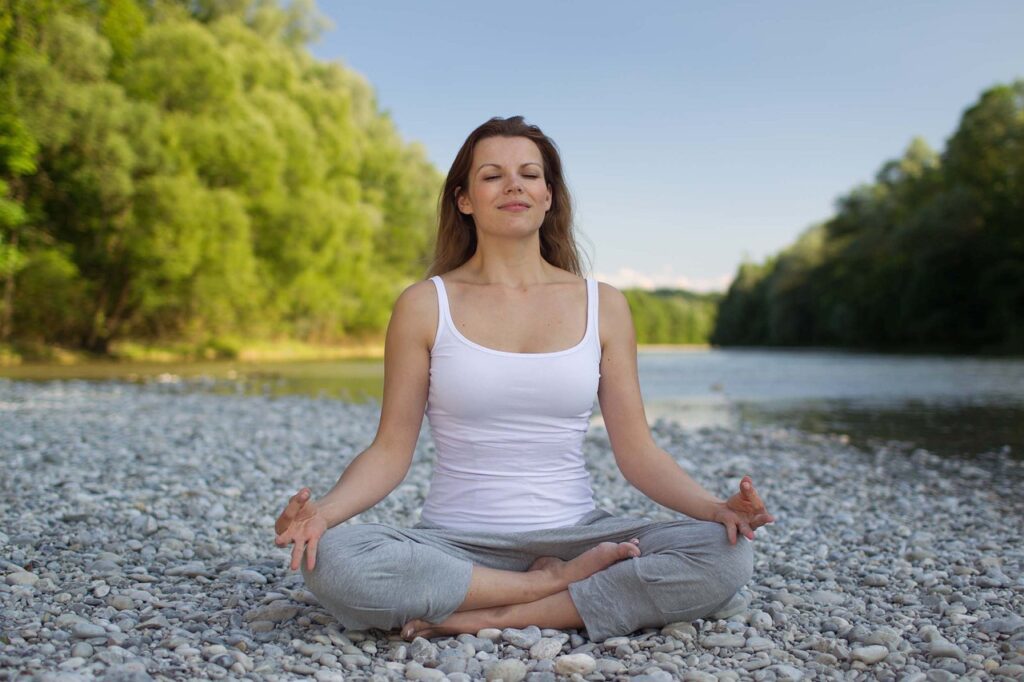
The easiest way to begin mindful meditation is to find a quiet place where you won’t be disturbed for about 15 minutes. Close your eyes and sit with your back and spine straight. This posture helps your body stay relaxed while keeping your mind alert.
You can sit cross-legged on the floor or on a chair with your feet flat on the ground. Rest your hands on your lap with your palms facing up or down, whichever feels more comfortable to you. Once you’re settled, try to stay as still as possible.
Many people believe meditation means sitting in complete silence with a blank mind. That isn’t true. The goal is not to stop your thoughts but to stop reacting to them.
The mind naturally keeps producing thoughts. Even experienced meditators do not reach a state where they have no thoughts at all. In yogic philosophy, a state of complete liberation is called shunya or moksha, but this is not what you should expect from a regular meditation practice.
Most of us automatically get carried away by every thought that enters our mind. Mindful meditation helps you step back and simply observe your thoughts instead of following them. It teaches you to let thoughts come and go without giving them your full attention.
Many people stop meditating because they notice more thoughts when they sit quietly. If this happens to you, don’t worry. It is actually a sign that you are becoming more aware of your mind. Having thoughts during meditation is completely normal.
Imagine you are standing at your gate watching cars pass by on the road. Some cars come toward you, while others drive away. You simply watch them without feeling the need to chase them. Your thoughts should be treated the same way. Notice them, but don’t follow them.
Our minds are filled with all kinds of thoughts throughout the day. Some are happy, some are negative, some bring fear, while others bring excitement. Let every thought come and go. The moment you start engaging with a thought, you give it your attention and allow it to grow. But when you don’t react to it, the thought usually passes on its own.
Think about those passing cars again. Sometimes a beautiful car catches your attention, but you don’t run after it, do you? You simply notice it and let it continue on its way. Thoughts deserve the same response.
The same idea applies to the clouds in the sky. You enjoy watching them drift by, but you don’t search for the cloud you saw a few days ago. You allow each one to appear and disappear naturally. When we stop holding on to our thoughts, we experience the same sense of peace.
As we learn to detach, we slowly let go of old habits, negative thinking, and unnecessary judgments. Instead of getting stuck in the past or worrying about the future, we stay connected to the present moment, where everything feels calmer, safer, and more manageable.
I know this is easier said than done because I have experienced the same challenges myself. That’s why I’m sharing the simple steps and common mistakes that took me time to understand, so your journey can be a little easier.
Whenever a thought appears in your mind during the mindful meditation practice, simply notice it without judging yourself. Then gently bring your attention back to your breath. Focus on each inhale and exhale, and you’ll often notice the thought fade away within a few seconds. If focusing on your breath feels difficult, you can slowly count each breath instead. The goal is not to avoid thoughts but to gently return your attention every time your mind wanders.
Meditation is also a powerful healing practice. If you feel pain or discomfort in any part of your body, gently bring your attention to that area and take slow, deep breaths. As your body relaxes, you may notice the discomfort begin to ease. With regular practice, this simple technique can help you feel calmer, both physically and mentally.
3 Powerful Mindful Meditation Practices for Deep Inner Peace
Here are my top three mindful meditation practices that have helped me become a better version of myself. Start with these simple yet powerful techniques, and with regular meditation, you’ll begin to notice positive changes in the way you think, feel, and respond to life.
1. Mindfulness Meditation: Being Present In The Moment
As simple as it sounds, mindful meditation is about being fully aware of the present moment without judging your thoughts or getting caught up in the past or future. It begins by sitting in a quiet place, closing your eyes, and taking a few slow, deep breaths to help you feel grounded. Once you’re seated in a comfortable position with your back straight and your hands resting on your lap, simply observe your breath. This is the foundation of meditation and one of the easiest ways to bring your attention back to the present moment.
Within a few moments, you’ll notice thoughts entering your mind. Sometimes they may come one after another in a continuous stream. Let them come and go naturally. Don’t try to push them away, and don’t get carried away by them either. Both resisting and reacting keep you attached to your thoughts, which is what mindful meditation teaches you to avoid.
It takes a few days of regular practice to truly understand its benefits. As you do it consistently, you’ll find it easier to observe your thoughts without becoming emotionally involved in them.
If sitting in silence feels overwhelming, you can try visualization instead. Close your eyes and imagine yourself living a happy, healthy, and fulfilling life. Picture yourself celebrating achievements, traveling, spending time with loved ones, shopping, or helping others. The more vividly you practice these positive visualizations during mindful meditation, the more familiar your mind becomes with the life you want to create.
2. Yoga Nidra/ Body Scan Meditation For Total Relaxation
Yoga Nidra, also known as body scan meditation, has been one of the most life-changing forms of mindful meditation that I’ve ever practiced. It is one of the greatest gifts I received from my yoga teacher, along with her wisdom and kindness. When I first learned Yoga Nidra, I never thought I’d be unlocking the key to embracing the best quality of sleep ever.
To practice this form of mindful meditation, simply lie on your back with your arms and legs comfortably apart and your palms facing up or down, as per your preference. Then slowly bring your attention to each part of your body, starting from your toes and moving all the way to your head. As you focus on each area, consciously relax it before moving on to the next. This gentle body scan helps release physical tension and prepares both your body and mind for deep relaxation.

Once you’re settled, focus on your natural breathing without trying to change it. Notice the gentle rise and fall of your abdomen or the feeling of your breath moving through your nostrils. During this mindful meditation practice, you can breathe into any area where you feel tension or stress while silently repeating positive intentions or affirmations. Another option is to gently tighten the muscles in each body part for a few seconds and then completely relax them.
You can also imagine a warm, healing light slowly moving from your feet to your head and then back down again, filling your entire body with a sense of peace and calm. Although you can practice this anytime, I find it most effective at night when I’m already in bed and ready to sleep. It is deeply relaxing and helps your body unwind after a long day.
When done properly, you can notice a difference in your energy levels almost instantly. The first time I practiced this form of mindful meditation, I slept deeply through the night and woke up feeling refreshed, happier, and much lighter.
If you haven’t tried it yet, I highly recommend giving it a chance.
3. Forgiveness And Embracing Meditation: Healing Through Letting Go
I recommend starting this particular mindful meditation practice today because we all deserve to let go of the emotional burdens we’ve been carrying, whether consciously or unconsciously, for far too long.
To start, sit comfortably with your eyes closed and imagine yourself standing in a quiet room under a white spotlight. In front of you is someone you have difficulty with. It could be a person you’ve argued with, someone who has hurt you, or someone you still hold negative feelings toward.
Sometimes a person’s face will come to your mind immediately. Other times, you may remember someone you haven’t thought about in years, such as a childhood friend, a relative, or a former colleague. Simply allow the right person to appear without forcing it.
Choose one person at a time and imagine them standing in front of you. They are also under a spotlight, but theirs is red. Look at them and allow any memories or emotions to arise naturally. Let them come and pass without reacting to them. This is an important part of mindful meditation, as it teaches you to observe your emotions without getting lost in them.
After about a minute, look at the person and silently say:
“In this moment, I forgive you. I let go of all the negative emotions and feelings I have linked with you. I release all the anger, resentment, judgment, and bias. I let go of all the painful memories I have with you. We have both grown, and because of you, I am a wiser, more aware, and kinder person. I am sorry if I have ever hurt you in the past. It was never my intention. Thank you for all the experiences, both good and bad. I now release my emotional connection with you. I wish you perfect health, wealth, happiness, and peace. Stay happy, always. I bless you.”
When you finish, imagine the other person responding with the same forgiveness and kindness. As they finish speaking, see the red light above them slowly turning white. The white light above your head is now shining above theirs as well, showing that you are both surrounded by the same loving and peaceful energy.
There are two ways to end this mindful meditation practice. You can imagine walking toward the person, giving them a warm hug, and watching them leave with a smile. Or, if that feels unnecessary, simply watch their spotlight fade into darkness until they disappear, leaving only you standing peacefully under your own white light. Either way, the intention is to let go, find peace, and move forward without carrying the emotional weight of the past.

Both endings are equally powerful because they have the same purpose: to forgive the other person and let them go with peace. Choosing to switch off their spotlight is not rude or negative. It simply means you have decided to release your emotional attachment to them in a healthy way. During this mindful meditation practice, choose the ending that feels most natural to your intuition.
With regular practice, you’ll notice that you think about the person less often. Even when they do come to mind, you’ll feel more detached and emotionally calm. But still some memories run deep, so you may need to repeat this mindful meditation several times before you feel ready to completely forgive that person and move on.
Try not to let your ego stop you from forgiving, asking for forgiveness, or showing compassion during the meditation. Be open to seeing the situation from the other person’s perspective and accept that you may have made mistakes too. Even if you believe you weren’t at fault, there is nothing wrong with choosing peace over pride.
Whether you decide to end the relationship or rebuild it is entirely your choice. The goal of this meditation is not to tell you what decision to make but to free you from the emotional weight you’ve been carrying. When practiced consistently, you’ll find that the thoughts of that person will no longer disturb your peace.
Forgiveness is a gift you give yourself more than anyone else. Holding on to anger and resentment quietly fills your life with unnecessary negativity, while forgiveness helps you release that burden. Although it may feel difficult at first, this practice can actually bring a deep sense of emotional healing and inner peace within you.
No matter which of these three mindful meditation practices you choose to include in your daily routine, each one will help you become calmer, self-aware, and more connected to the present moment.


10 thoughts on “Mindful Meditation: 3 Practices for Deep Inner Peace”